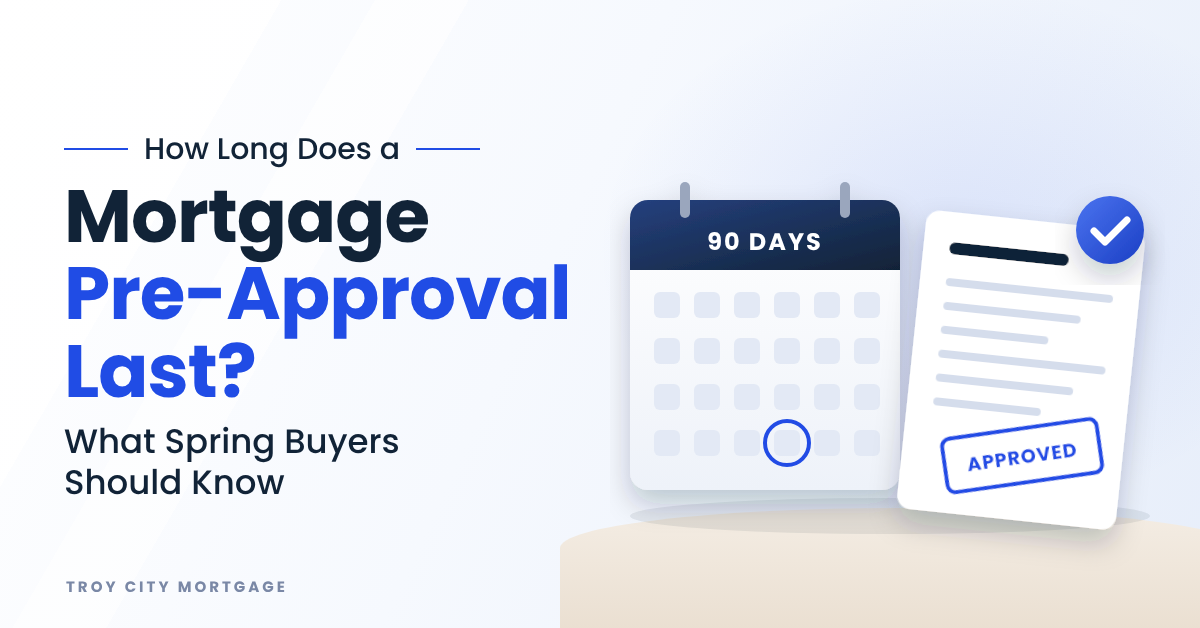
Most mortgage pre-approvals are good for 60 to 90 days. That is the short answer…
FHA vs. Conventional Loan: Which Is Right for You?
If you are buying your first home, there is a good chance the first real decision you make is not about the house at all. It is about the loan.
FHA or conventional. It is the question we get more than any other from first-time buyers, and the internet tends to answer it badly. You will read that FHA is “for people with bad credit” and conventional is “for people with 20 percent down.” Neither is true.
Both loans can work with a small down payment. Both can work with less-than-perfect credit. The right one depends on a handful of numbers that are specific to you, and the difference between the two can be a couple hundred dollars a month.
Here is how they actually compare.
The Quick Version
| FHA | Conventional | |
|---|---|---|
| Minimum down payment | 3.5% | 3% for many first-time buyers, 5% otherwise |
| Typical minimum credit score | 580 (500 to 579 with 10% down) | 620 |
| Mortgage insurance | Upfront fee plus a monthly premium | Monthly PMI, only if you put down less than 20% |
| Can mortgage insurance come off? | Only after 11 years, and only with 10% or more down | Yes, once you reach 20% equity |
| 2026 loan limit, Bristol County (1 unit) | $787,750 | $832,750 |
| Property types | Primary residence only | Primary, second home, or investment |
| Assumable by a future buyer? | Yes | Generally no |
That table covers the rules. The rest of this post covers what the rules mean for your payment, because that is where people get surprised.
Who Backs Each Loan
An FHA loan is insured by the Federal Housing Administration. The FHA does not lend you the money. A lender does, and the FHA promises to cover that lender if the loan goes bad. That government backstop is why FHA can be more forgiving on credit and debt.
A conventional loan has no government insurance behind it. Most of them follow the rules set by Fannie Mae and Freddie Mac, which buy loans from lenders. Since no one is backstopping the lender, conventional loans rely more heavily on your credit score when setting your price.
That one difference explains almost everything else in this post.
Down Payment: Closer Than You Think
FHA’s 3.5 percent minimum is well known. What fewer people know is that conventional can go lower.
Many first-time buyers qualify for conventional loans with 3 percent down through programs like Fannie Mae’s HomeReady and Freddie Mac’s Home Possible, or the standard 97 percent loan-to-value option. If you do not qualify for those, conventional usually starts at 5 percent.
So if the down payment is your only concern, it is not much of a tiebreaker. On a $400,000 house, 3 percent is $12,000 and 3.5 percent is $14,000.
Both programs also allow gift money from family toward your down payment, and both can be paired with down payment assistance. If you are buying in Massachusetts, it is worth looking into MassHousing’s programs before you decide.
Mortgage Insurance: This Is Where the Real Difference Lives
If you put down less than 20 percent, you pay mortgage insurance either way. How you pay it is what separates the two loans.
FHA mortgage insurance
FHA charges two things:
• An upfront premium of 1.75 percent of the loan amount. Most people roll it into the loan instead of paying it at closing.
• An annual premium, paid monthly. For most first-time buyers putting down 3.5 percent, that is 0.55 percent of the loan per year.
The catch is how long it lasts. With less than 10 percent down, the FHA premium stays for the life of the loan. With 10 percent or more down, it comes off after 11 years. The only other way out is refinancing into a different loan.
FHA also prices the premium the same way whether your score is 600 or 800. Your credit does not change it.
Conventional PMI
Conventional private mortgage insurance, or PMI, works differently in two important ways.
First, it is priced by your credit score and down payment. A buyer with a 780 score pays a lot less than a buyer with a 660 score.
Second, it goes away. You can ask to have it removed once your balance reaches 80 percent of your home’s original value, and it comes off automatically at 78 percent as long as you are current on payments. Paying extra principal or seeing your home value rise can get you there faster.
What That Looks Like in Dollars
Take a $400,000 home in the Fall River area.
With an FHA loan and 3.5 percent down, your base loan amount is $386,000. The upfront premium adds $6,755, which most buyers roll into the loan. The annual premium is about $177 per month to start, and you keep paying it for as long as you have the loan.
With conventional and 5 percent down, your loan is $380,000, and there is no upfront fee. Your PMI depends on your score. With strong credit, it is often well under the FHA premium. In the mid-600s, it can cost more than FHA.
We are not going to quote you a rate here. Rates change daily, and pricing varies by lender. But the pattern holds up across almost every file we see:
• Credit score of roughly 720 or higher: conventional usually wins, often by a lot.
• Credit score under roughly 680: FHA often wins on the monthly payment.
• Somewhere in between: run both. This is where the answer really is file by file.
You can see how different payments play out with our mortgage calculators.
Credit and Debt: Where FHA Earns Its Reputation
FHA allows scores down to 580 with 3.5 percent down, and down to 500 with 10 percent down. Conventional generally starts at 620.
Those are program minimums. Lenders add their own rules on top, which the industry calls overlays, and those vary from lender to lender. One lender may not look at a 600 FHA file. Another will. We covered how that works in our post on boosting your credit score before you apply.
FHA is also more flexible on debt-to-income ratio, which is how much of your monthly income goes to debt payments. If you have student loans or a car payment that is pushing your ratio up, FHA can sometimes approve a file that conventional will not.
FHA also has shorter waiting periods after a major credit event. After a Chapter 7 bankruptcy, FHA generally requires two years. Conventional generally requires four. After a foreclosure, it is roughly three years for FHA and seven years for conventional.
The Property Matters Too
This one catches people off guard.
FHA appraisals check the condition of the home against the FHA’s minimum property standards. Peeling paint on an older home, a roof nearing the end of its life, missing handrails, or a heating system that is not working can all delay an FHA loan until they are fixed. In a city with as many older homes as Fall River, that comes up.
Conventional appraisals focus primarily on value and are usually less strict about condition.
On the other hand, FHA has a real advantage on multi-family homes. You can buy a two- to four-unit property with 3.5 percent down, as long as you live in one of the units. For anyone looking at a two-family or a triple-decker, that is worth a serious look. Conventional now allows 5 percent down on owner-occupied two- to four-unit homes, which narrowed the gap, but the credit and pricing differences above still apply.
FHA is for homes you will live in. If you are buying a vacation home or a rental property, conventional is the path.
Two FHA Perks People Forget
FHA loans are assumable. If you sell your home someday, a qualified buyer can take over your FHA loan at your interest rate. If rates are higher when you sell, that can make your home more attractive.
FHA allows more help from the seller. A seller can contribute up to 6 percent of the price toward your closing costs on an FHA loan. Conventional caps that at 3 percent when you put down less than 10 percent.
Common Questions About FHA vs. Conventional Loans
Is FHA only for first-time buyers?
No. FHA is open to anyone buying a home they will live in. It is popular with first-time buyers because of the low down payment and flexible credit rules, but there is no first-time requirement.
Can I switch from FHA to conventional later?
Yes, by refinancing. Plenty of buyers start with FHA, build equity and improve their credit, then refinance into conventional to drop the mortgage insurance. Just keep in mind that a refinance comes with its own closing costs and depends on rates at the time.
Which loan has better interest rates?
FHA rates are often a bit lower on paper. But the rate alone does not tell you the payment. Once you add mortgage insurance, conventional often comes out ahead for buyers with strong credit. Compare the full monthly payment, not just the rate.
What if the home I want costs more than the loan limit?
In Bristol County, the 2026 limits for a single-family home are $787,750 for FHA and $832,750 for conventional. Above that, you would need a bigger down payment to stay under the limit or a jumbo loan.
Does FHA take longer to close?
Not much in most cases. The bigger timing risk is the appraisal. If the appraiser calls for repairs, those need to be handled before closing.
Can I use down payment assistance with either loan?
Often, yes. Many Massachusetts assistance programs work with FHA, conventional, or both, and some offer their own loan products. The details depend on the program and your income.
What to Do Next
• Find out your actual credit score, because it is the biggest factor in which loan wins.
• Know your down payment number, including any gift money or assistance.
• Compare the full monthly payment for both loans, including mortgage insurance.
• If you are looking at older homes, ask early how condition could affect an FHA appraisal.
• Look into first-time buyer options before you lock in a plan.
The best way to settle this is to price your actual file both ways. Because we are a broker, we can run FHA and conventional side by side across dozens of wholesale lenders, then show you the monthly payment, the cash to close, and how long the mortgage insurance lasts for each one.
Not sure which one fits?
Send us your situation, and we will price both loans for you using real numbers rather than rules of thumb. If one is clearly better, we will tell you. If it is close, we will show you why.
Get a quote or call us at (508) 207-5864. Already have a Loan Estimate from another lender? Send it through our Second Look, and we will tell you within 24 hours whether we can beat it.
Troy City Mortgage LLC is a licensed mortgage broker (MA Mortgage Broker License MB1591856, Company NMLS 1591856). We arrange but do not make loans. This article is for informational purposes only and is not financial advice. Loan program guidelines, mortgage insurance rates, loan limits, and lender overlays vary by lender and change over time; the figures here are illustrative and current as of November 2026. This is not a commitment to lend. All loans are subject to credit approval.

Related Posts